Showing posts with label gold. Show all posts

Wednesday, 28 December 2011

Gold: some little-known factoids

Nowadays, very few people have any experience with large quantities of gold. This was mostly true in years past, of course, since there has never been and will never be a "lot" of gold around. However, this lack of understanding about the yellow metal does lead to some pretty interesting assumptions and depictions.

What started all this off was when I saw the new movie Tintin, yesterday. It was a pretty ordinary movie, as these things go, but apart from all that at the centre of the plot is some sort of gold treasure. This is described as "four hundredweight of gold" which is depicted in the film as a secret hold in a wooden ship about 1 foot deep in gold coin and assorted jewels and treasures. This brings my to my first factoid:

1. Gold is much denser than is generally supposed.

Most people's experience with the density of metals comes from steel. When we pick up an aluminium object, at least, when I do, I often get "tricked" by how light it is, especially if I can't see what colour the metal is. Iron and most steels hover around the 7.8 g/cc mark, meaning that a cubic meter of them would weigh 7.8 tonnes. Put another way, a tonne would occupy 128 L of volume, or a cube 50 cm on a side. Gold is considerably denser than iron, at more than 19 g/cc. A one tonne cube of gold, should you ever be unlucky enough to be asked to move one, would be just over 37 cm on a side. This means that the amount of gold depicted in the Tintin movie is something like 10 or 20 tonnes, way more than the 200 kg or so that "four hundredweight" would represent.
This also makes gold dangerous, specifically, the types of gold bars used to store gold in vaults. The bars in the Fort Knox depository each weigh about 12.5 kg and are only an 4.5 cm wide, so you can imagine crushing a finger by dropping one just a small distance. The heaviest bar ever made weighs 250 kg and if I remember correctly, if you can pick it up you can have it.
You'd look pretty stupid with that for a hand, though

2. Gold is inert.

Most people do know this one, but it's actually pretty amazing just how reluctant gold is to do anything, chemically speaking. Not many metals could shrug off a bath of concentrated sulphuric acid or caesium hydroxide solution (dissolves glass, your dog etc), but gold can. That's all I can say without being boring about this one. This is one of the reasons we plate quite a lot of gold onto electrical connections. It doesn't help conductivity much per se but it does prevent corrosion forming that would affect the conductivity of the join.

3. Gold is soft.

Gold is by no means the softest metal around, but it is pretty limp for a metal that is often used to make objects out of. That's why in some movies about the old West you see people biting gold coins. If you bit into an iron coin plated with gold then it would not leave teeth marks but gold will flow even under this modest pressure. This also makes it lovely for making fine jewelery, since you don't need a hammer to make it do the intricate shapes.

4. Gold is malleable.

This might seem like the same thing as soft, but the two are only slightly related. Malleability is the tendency of a metal to remain soft as you work it. Copper, while quite soft is not very malleable. It will work harden into something impossibly unworkable, but gold will keep on flowing smoothly and evenly no matter how much you hammer it. This means you can hammer (or roll, these days) gold into incredibly thin sheets or wires.

5. Gold is an exceptional heat reflector.

Many times you will see gold foil in a satellite. The Lunar Module had quite a lot of gold foil on it as well, and the reason for this is that gold is the best way to stop heat radiation, or to reflect it, more precisely. This also means that it is used in some top end race cars and F1 cars around the engine bay, to prevent the heat generated by the engine from leaking out and damaging sensitive part of the car. Satellites are similarly protected from the intense heat radiation coming from the Sun.
Of course, not every satellite is made entirely of gold

6. Gold supports surface plasmons.

This is really esoteric for most people, but the practical upshot is that you can use gold to make red glass:
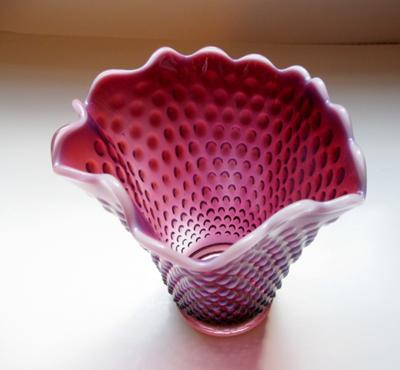
This is also called cranberry glass, and its rather nice colour comes not from gold ions but very small particles of gold embedded in the glass. So if you divide this yellow metal up finely enough, it begins to appear red. Silver also does something similar but most glass colouring as a result of the presence of metals invove their ions, not nanoparticles, making this type of glass fairly unique.

Tuesday, 27 December 2011

A new precious metal standard

A lot of economists of the Austrian or "philosophical" (as I like to call them) school yearn to be back on the gold standard. This, it seems, is the gold standard of money supply options. It solves all the problems of inflation, deflation government credit expansion and private credit expansion, so it must be good, right?

Gold

Well, sort of. Most of these people would, I imagine, envision a return to gold coins and private bank notes backed up by 100% reserve requirements. Personally I think that gold is too valuable and will make small transactions tricky. The obvious answer is silver but then you can't go bimetallic with a fixed exchange rate or there will be trouble. The other problem with gold and silver, the most serious problem as I see it, is that they are quite soft and suffer wear, thus lowering their value over time. There are engineering solutions to this, and I believe I have come up with one of them.

Most coins of the last few centuries are pretty similar. Raised images and lettering on both sides, with a raised edge produced through rolling. These days the raised edge is just part of the work hardening of the piece, really, since most coins contain a large amount of copper, but in the past it was there to make coin clipping easily visible. Coin clipping is the practice of cutting pieces off a precious metal coin in order to sell the valuable metal or strike your own coins. Precious metal coins are supposed to be a particular weight and purity, which is certified by the fact that they are struck as coins. Leave most of the coin intact while removing a small piece of it, and you can spend the coin at the same value as before, plus you now have some extra gold to sell.

The fact that a substantial portion of the coin is proud gives us the chance to produce a more durable gold or silver coin. Simply replace the edge and the images with some superalloy like inconel, strike the whole thing together and you have a (mostly) gold coin with that attractive two tone finish that can really handle the ravages of everyday commerce.
Not exactly what I meant but you get the idea

Gold is so much more valuable than inconel that it will represent nearly all of the coin's value, and you may then produce coins with quite a small amount of gold set into them to make smaller denominations. Speaking of which, here comes engineering solution number two.

It is not enough to simply put vanishingly small amounts of gold into a coin. This would cause problems if nickel or any of the other major constituents of inconel were to seriously appreciate in value at some future date. You must therefore use a third, intermediate value metal. Silver fits the bill perfectly. Traditionally, it was necessary to use coins of pure silver or pure gold, to allow transactions to occur in either metal at universal equal value, with a floating exchange rate between the two to avoid the consequences of Gresham's law. I don't think that is necessary. Since by using a nickel alloy we are effectively already on a bimetallic standard with mixed coins, let's introduce the silver gradually down the value scale. Very high denomination coins would be nearly all gold, then as we go to lower denominations there would be an increasing fraction of silver until silver was the only "precious" metal in a particular denomination, and then we could increase the inconel content to get the lower denominations. This pretty much solves the exchange rate problem since we would balance the face value of the coins to be related to the historical average exchange rate (about 40:1, if you were wondering), and the gradual change over of the metals gives the exchange rate actually quite a wide variability without the relative value of denominations close to one another changing significantly. In fact my analysis shows that you can actually modify the exchange rate by a factor of 1.5 and commerce would be virtually unaffected, unless someone tries to get change in 5c pieces of a $1000 coin. Exchange rate problems could occur, in fact, if gold or silver changed significantly in value relative to the other and many people got the idea to exchange high gold for high silver content coins, or vice versa. In this case the face value would be off by enough to make the arbitrage worthwhile. But there is a very simple solution to this as well: float the exchange rate for exchanges of coins with large differences in the magnitude of their face value. It's not really that inconvenient, since such exchanges would be rare and trying to fix the face values for all time would increase the number of such exchanges, so floating that rate makes them unprofitable, unless someone were to have prior knowledge of a relative price spike in either metal which is pretty rare.

Now we come to the sticky subject of bank notes. Under the above monetary system, it would be most efficient to have each bank duly print its own notes or perhaps contract some excellent third party printer, which amounts to the same thing, but, crucially, the bank notes should have the same denomination as the precious metal currency they are standing in for. When someone presents a bank with one of its own notes, say a $5, it should give a $5 coin, or if both parties agree, $5 in other change at whatever floating exchange the two agree on. Banks should in general be willing to accept the notes of other banks, since they can then simply go to the bank in question and demand their specie for use as loans or reserves.

Loans and demand deposits are an interesting one. If all demand notes were to have a specified loan lifetime then the interest the bank earned loaning the money out could pay the storage fee. The note could then be redeemed at any time after the loan expiry but, critically, there would be an incentive to redeem the note as soon as it fell due, since banks could charge a storage fee or keep the money loaned out earning them nice interest for which the bearer could not demand a return. He would then want to redeem the note and perhaps loan the money out again at a better interest rate, save it in his own safe or just spend it. Banks could even redeem demand notes sooner than the due date, for a small fee of course.

All of that would mean that the total money supply might be about double the amount of the actual gold and silver. Now let's consider loans. In this economy, all bank loans would come out of savings in those banks of actual savers who have actually deposited the money there. They could not simply print more demand notes than there was metal, since other banks and people would certainly come to redeem them. They would, however, print loan notes. These would be interest bearing assets given to people who deposit money for a given time at a given interest rate. The loan's value, due date and interest rate would be on the loan note. If the depositor fell on hard times he could liquidate the note by selling it to a bank, or anyone really. The price paid for it would closely relate to all three essential features of a loan: interest, term and principal. These loan notes, then, would not circulate as currency but would be rapidly convertable, making them a kind of money. Their impact on the money supply would not be great, however. The borrower would be given demand notes or specie, what he preferred would make little difference to the bank. Large loans might require a fairly hefty amount of gold so it would be more convenient for someone borrowing money to build a power station, for instance, to get that money as demand notes, but in principle any form of money would be equal.